Freezing temperatures can create significant problems for industrial piping, valves, equipment, and the fluids moving through them. But effective freeze protection involves more than simply wrapping a pipe in insulation.
A properly designed system starts by understanding how heat moves from the fluid and piping system into the surrounding environment.
What Does Insulation Actually Do?
Thermal insulation limits heat transfer between a surface and its surroundings. In freeze-protection applications, this means slowing the rate at which heat leaves a warmer pipe, vessel, or piece of equipment and moves into colder ambient air.
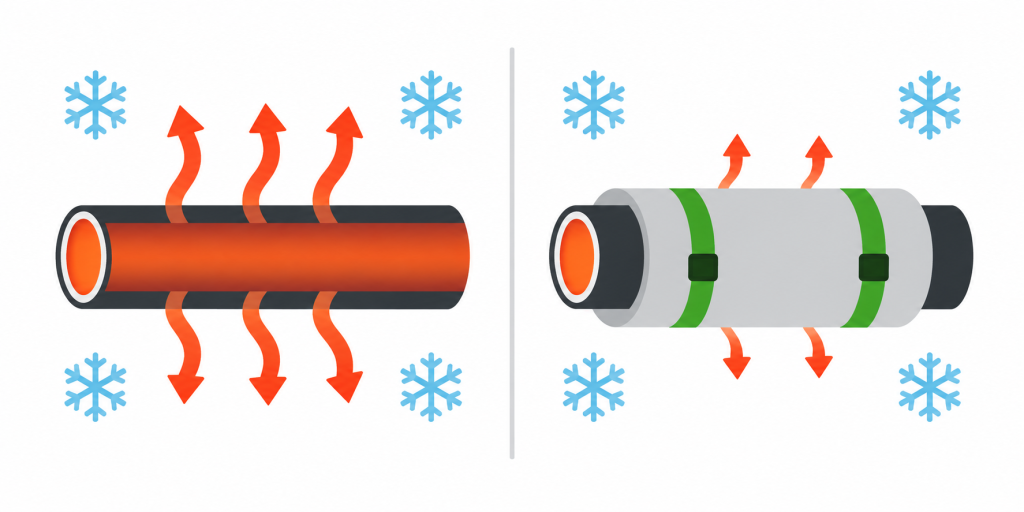
While insulation does not generate heat, nor does it completely stop heat transfer. Insulation can extend the amount of time required for water to freeze. Prolonged exposure to cold temperatures can eventually freeze stagnant water even when the pipe is insulated, leading to cracks and bursts.
When Heat Is Required?
When natural fluid flow and/or insulation cannot provide adequate protection from freezing temperatures, it’s important to consider thermal heating methods.
One of the most common heating methods, and the method found in FreezePro insulation systems is heat tracing cable.
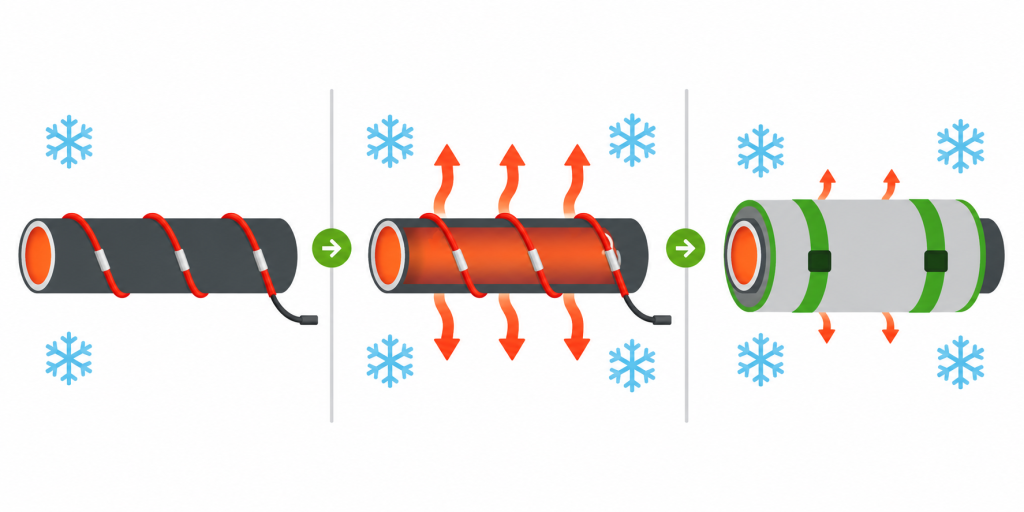
Traditionally Heat trace cable is wrapped around the pipe and secured with insulated blankets such as ceramic fiber blankets, however, FreezePro products combine the two for easy one step install.
The essential concept is that the two products are serving complementary functions;
the heat trace supplies the heat and the insulation retains the heat.
Regardless of how you choose to pair your heat trace and insulation combo, the essential concept is that the two products are serving complementary functions; the heat trace supplies the heat and the insulation retains the heat.
What Engineers Should Consider
Freeze protection isn’t as simple as the outdoor temperatures. There are many factors that can lead to frozen pipes and in turn, pipe damage. Here’s a list of a few thing any engineer should think about when creating a frost protection plan.
- Pipe diameter
- Pipe length
- Pipe material
- Minimum ambient temperature
- Available electrical supply
- Desired maintenance temperature
- Startup temperature
- Insulation type
- Insulation thickness
Freeze Protection Is a System
The most useful way to approach freeze protection is therefore to look at the entire thermal system rather than one component. Engineers should consider the fluid, piping, equipment, insulation, environmental conditions, heat source when required, controls, and weather protection. When you understand the heat loss of a system you can then provide an adequate means of controlling it.
This is week 1 of a 10 week series discussing the methods and science of frost protection systems. To learn more or to follow this series click this link: Link
To find out more information on the frost protection offerings that Unitherm International can provide, go to shop.unitherm.com to view our full listing of products or email quote@unitherm.com to speak to a representative about custom insulation solutions.