Unitherm Insulation Systems

  • Home
  • Shop
  • Insulation Solutions
    • Plastics Equipment Insulation
    • Pipe and Valve Insulation
    • Passive Fire Protection
    • Freeze Protection and Material Handling
    • Exhaust Insulation
    • Marine Exhaust Insulation
    • Rigid Board Insulation
    • OEM
  • Applications
    • Aerospace
    • Data Centers
    • Defense
    • Exhaust Systems
    • Gas Compressors
    • Locomotive
    • Marine
    • Oil and Gas
    • On Highway
    • Power Generation
    • Reciprocating Engines
    • Turbines
  • Services and Capabilities
    • Custom Insulation Blankets, Jackets, and Covers
    • 3D AutoCAD
    • High Temperature Raw Goods
    • Custom Embroidery
    • WaterJet/CNC Machining
    • Private Labeling
  • Reseller Program
    • Reseller Locator
  • Blog
  • About
    • Contact
    • News
    • Customer Service
    • Order Now
  • Media
    • Documents
    • MSDS Sheets
    • Product Literature
    • Product Gallery
    • Video
    • Energy Study Library
    • New Customer Form
  • NPE 2027

June 1, 2026 by UniAdmin

The ROI of Removable Insulation: How Plastics Manufacturers Cut Energy Costs

Walk the floor of almost any injection molding or extrusion facility and you’ll find the same scene: bare barrel heater bands radiating heat into the air, cooling systems working overtime to compensate, and utility bills that never seem to come down.

It’s inefficiency hiding in plain sight, and it’s surprisingly simple to fix.


Removable insulation jackets for plastics equipment are not a new idea, but their return on investment is often dramatically underestimated. At UniTherm International, we’ve conducted energy studies across hundreds of facilities. The results are consistent: properly insulated barrel zones and hot runner systems typically reduce energy consumption by 35–50% in those areas, with payback periods measured in months, not years.

Where the Heat (and the Money) Is Going:

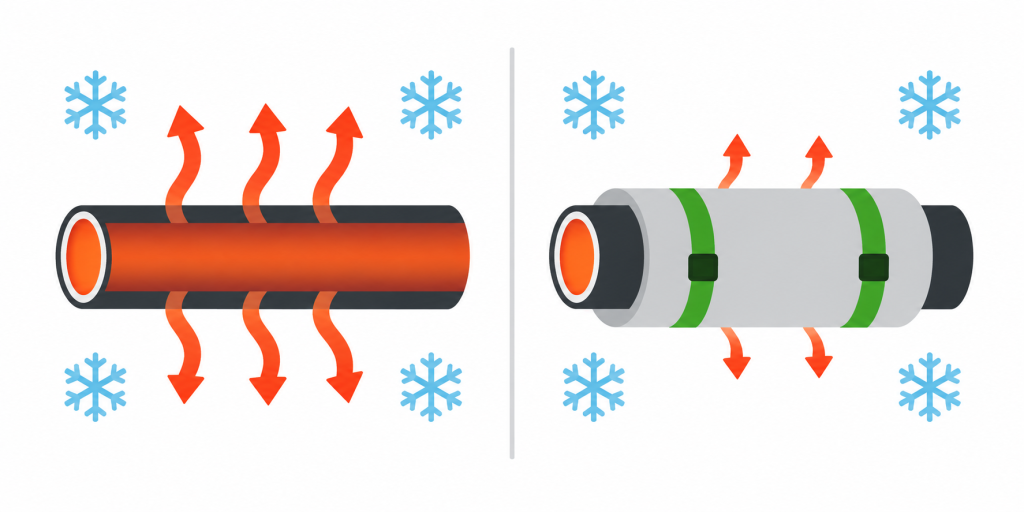
An exposed heater band on an injection molding barrel can radiate significant energy losses. Multiply that across a 10-machine shop running two shifts, and you’re looking at a meaningful annual waste. Beyond direct energy cost, there are secondary effects:

  • Ambient temperature rise forces HVAC systems to work harder, especially in summer.
  • Uneven thermal conditions stress components and contribute to faster wear.
  • Workers in close proximity to hot equipment face health and safety concerns.

Why Removable? Why Not Just Permanent Insulation?

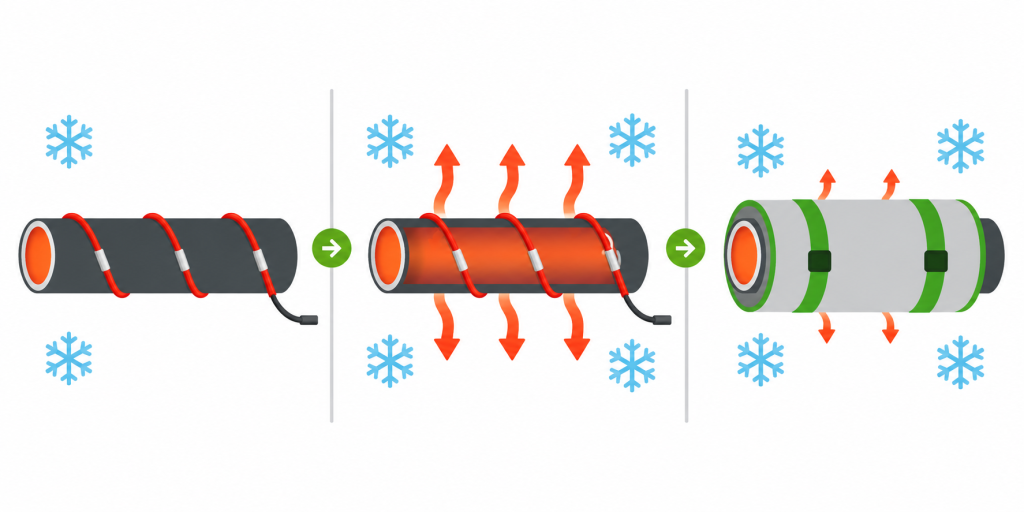
This is the key question, and it’s where UniVest® insulation jackets shine. Unlike rigid or permanent insulation, removable jackets come off quickly for maintenance, inspection, or changeover and reattach in minutes. No cutting, no mess, no downtime penalty.

UniVest® jackets, constructed from high-temperature-rated materials, withstand heat, oils, and mechanical abuse typical on plastics shop floors. Custom-fit to your equipment using 3D AutoCAD modeling, they cover barrels, nozzles, hot runners, and other heated zones without interfering with normal operation.

What Does an Energy Study Show?

UniTherm offers complimentary energy studies that calculate the projected savings specific to your equipment, run schedule, and utility rates. Inputs include current surface temperatures, hours of operation, and local kWh cost. The output is a straightforward payback analysis — typically showing full cost recovery within 6 to 18 months.

One Texas-based molder with 22 machines reduced monthly energy spend by over $3,000 after insulating barrel zones on their larger presses. The jackets paid for themselves in under a year. More importantly, their process temperatures stabilized, reducing scrap rates as a secondary benefit.

Getting Started

The fastest way to assess the opportunity at your facility is to request a free sample jacket to test on your highest-heat machine. UniTherm International’s team will work with you to identify which zones offer the greatest return and quote custom-fit jackets from there.

Margins are tight and energy costs are one of the few controllable line items. Removable insulation is one of the highest-ROI investments available that doesn’t require a capital budget approval to get started.

Click Here to order your free UniVest® Sample today, or connect with our Sales Team to discuss a custom sample request.

Filed Under: Energy Efficiency, Plastics Industry, Safety Tagged With: efficiency, energy conservation, energy efficiency, energy management, manufacturing, plastics, thermal insulation

April 22, 2015 by UniAdmin

Earth Day 2015: Insulation Facts Infographic

earthday-infographic

Filed Under: Energy Efficiency, Uncategorized Tagged With: Earth Day, earth day 2015, education, efficiency, energy conservation, energy costs, energy efficiency, energy efficiency projects, energy management, Energy Rebates, energy savings, environment, industrial insulation facts, innovation, insulation, lean manufacturing, lower emissions, Research & Development, save energy, thermal insulation

January 21, 2015 by UniAdmin

4 Common Misconceptions About Industrial Insulation

We come across many people who have the wrong idea about industrial insulation and think what we offer is not right for them. We ask them a few questions, and usually they are left wondering why they haven’t insulated their equipment sooner. We throw them a UniVest and they rush out the door to install it (cause it’s really that simple).

So we don’t have to go through the same spiel every time, we’ve compiled the most common misconceptions people have when it comes to industrial insulation.

1. Insulation is for my home, not my machines 

This is the most common one we come across and it’s pretty obvious why. The first thing people think about when you say insulation is their home and what’s inside their walls. That’s a perfect analogy because UniVests work the same way. Properly insulating your home saves you hundreds of dollars a year on home heating and cooling costs. It protects outside temperatures from affecting the temperatures you want inside. The easier it is for your home to maintain its temperature, the less you spend at the end of the month. UniVests are no different, except we deal with higher inside temperatures. Take a second and think, if you save hundreds by properly insulating your home, imagine how much could be saved when insulating your machine. We’ll give you a hint…its much greater!UniVest-3-Strap-On-Off-W-Background-Color

2. No Budget for Insulation

We all have budgets. Yeah, and we know they can be small and hard to deal with. Trust us, Windows 98 is getting really old at the office. Making new purchases on things that you are already operating without can seem like a luxury purchase. Little known fact is that with proper insulation, a company can see ROI (Return on Investment) in under 12 months. In the right conditions, a single set of UniVests or ISOCOVERS can last 5+ years after installed. That’s 5+ years of return. In 12 months or less, most companies make back the purchase price of a UniVest from energy savings alone.

3. My machines are working fine now without insulation

We’re sure they do, but wouldn’t you like for them to work better? Insulation minimizes the downtime of the machines they are on and relieves stresses from a hard working machine. This even increases the lifespan of the equipment. Wouldn’t we all like to work a little easier? Your machines would too.

4. Who Needs Protection AnywayIMG_8583

The biggest thing that people don’t realize is that insulation also improves workplace safety. As seen in a few of our videos on Youtube, a heated barrel with a UniVest on it can be touched and worked around without any special protective gear. More Safety = Less downtime and less liability. Insulation can also decrease surrounding ambient air temperature. Decreasing work fatigue due to high temperature and more comfortable work areas. 

Here’s typically the point where some people are kicking themselves for not already having insulation installed. If you didn’t make it this far, we completely understand. Our insulation systems are much more than the sum of their parts and offer a lot more usability than most people realize. If you’ve finally come to the conclusion that insulation could benefit you, take a look around our online shopping cart at www.shop.unitherm.com. For some help finding the product, measuring, or just want some more insulation entertainment like this blog, visit our youtube page: www.Youtube.com/UniThermInsulations

Filed Under: Energy Efficiency, Freeze Protection, From the Marketing Team, Manufacturing, Plastics Industry, Safety, Uncategorized Tagged With: cooling, education, energy, energy conservation, energy costs, energy efficiency, energy efficiency projects, energy management, environment, heating, industrial applications, industrial insulation, innovation, insulation, lean manufacturing, manufacturing, manufacturing industry, plastics, safety, thermal insulation, UniTherm, unitherm international

June 6, 2012 by Kendal White

Budgeting For Energy Efficiency Projects

Budgeting for energy efficiency projectsCompanies always look to make the best decisions when selecting capital projects to work into the budget; simple metrics like Return on Investment and Internal Rate of Return tend to dictate how the budget for these projects is written each year. In an effort to increase the bottom line, investments are often times funneled toward projects and purchases that directly affect sales rather than decreasing operating costs, but sales growth is never guaranteed.
In other cases, capital projects are indefinitely suspended, forcing companies to make due with what they have until either more funding becomes available or sales increase. [Read more…]

Filed Under: Energy Efficiency Tagged With: capital projects, costing, costs, energy conservation, energy consumption, energy costs, energy efficiency, energy efficiency projects, energy efficiency system, energy management, energy policy of the united states, energy projects, energy rebate program, energy star, indefinitely, projects, rebate, sales promotion, save energy

May 10, 2012 by Kendal White

Smart Grids: Bringing Utility Systems into the 21st Century.

What is a smart grid?
Just as smart phones have evolved into multi-purpose devices that support a wide range of applications, smart grids have become a way to computerize the electric utility grid and better manage the increasing energy needs of 21st century consumers.

The “grid” encompasses all the networks that carry electricity from the plant where it is generated to the homes and office buildings where we consume it. Smartgrid.gov refers to our current grid as an “aging infrastructure” set up to handle only simple energy demands.

For the past 100 years, utility workers have had to go out to gather much of the data needed to provide electricity — reading meters, looking for broken equipment, measuring voltage, and so on. And most of the devices utilities use to deliver and manage electricity rely on manual or analog systems. Now, the electricity industry is taking great strides to modernize the process.

A smart grid system digitizes data collection and also acts on information about consumer behavior — similar to the way Google learns your online searching habits and Netflix knows your movie preferences. Each device on the network has hi-tech sensors to gather data and automation technology that allows the utility company to adjust and control each individual device or millions of devices from a central location.

In addition, a smart grid system can

  • Detect faults and isolate outages
  • Restore electricity quickly and strategically after power disturbances
  • Reduce management costs for utilities, lowering power costs for consumers
  • Reduce peak demand, which will also help lower electricity rates
  • Enable active participation by consumers in demand response
  • Integrate large-scale renewable energy systems
  • Integrate customer-owner power generation systems
  • Operate resiliently against physical and cyber attack

Who supports the smart grid?
In 2007, Congress passes the Energy Independence and Security Act, which supports the DOE in leading and coordinating a national grid system. Such a system would involve upgrading the current system or replacing it altogether. Smartgrid.gov advocates that a modern grid be constructed “from the bottom up to handle the groundswell of digital and computerized equipment and technology dependent on it.”

In 2009, the Obama administration allocated $3.4 billion in grants as part of a stimulus package to help utilities develop and implement technologies such as smart meters, digital transformers, and automated power monitoring and management systems.

We have seen smart grids deployed on a smaller scale in cities like Austin (2003) and Boulder (2008), and several areas in Europe and Canada are currently working towards large-scale smart grid systems.

Smart grids are designed to give consumers more control over their energy use. Imagine monitoring and managing electricity just as you do your bank account. Smart grids will provide a clear and timely picture of how much electricity you use and when it costs the most to run.

To learn more, download the DOE’s Smart Grid System Report, and check out unitherm.com for more ways to take control over your energy expenses.

Filed Under: Energy Efficiency Tagged With: DOE, elecricity industry, elecricity rates, electric grid, energy conservation, energy costs, energy efficiency, energy efficiency projects, energy management, power outages, renewable energy, smart grid, utility costs

May 8, 2012 by Kendal White

The Evolution of Insulation

As we grow more aware of our environmental impact—and as utility bills grow more costly—energy efficiency becomes a central concern in construction projects and building updates. LEED certifications set efficient buildings apart from the rest. Pink attic insulation doesn’t quite cut it anymore.

Natural Insulation
Although it’s a hot topic now, energy efficiency—insulation in particular—is nothing new. Since the beginning of time, the Earth and its inhabitants have found remarkable ways to regulate temperature. Atmospheric gases gather in the ozone layer, water surrounds land, mammals grow fur and store body fat, birds are born with feathers, and early on, humans discovered heat-trapping material like wool.

We have always put extra effort into shielding ourselves from the elements. Early humans built their homes out of natural insulators like grass, leaves, straw, mud, ice, and mountainsides. And landscaping wasn’t always about aesthetics—trees planted near houses provided precious shade and insulation.

While keeping extreme temperatures out, people also came up with ways to generate heat within. Some buildings in the Roman Empire and ancient Korea used empty spaces in floors and walls to conduct air heated by furnaces. By 1700, Russian engineers began developing water-based systems to circulate heat.

Synthetic Insulation
With the advent of modern heating systems came the need for better insulators. After all, gas and electric systems don’t come cheap like heat from a wood-burning furnace, and they create conditions that need to be regulated in order to work properly.

In 1930, Dale Kleist, a researcher at the Owens-Illinois Glass Company, made one of those lucky mistakes that so often leads to a monumental discovery. While trying to seal two plates of glass together, he accidentally shredded the glass into tiny fibers with a high-pressure air hose. Thus, fiberglass was born and soon found its most common form in blanket insulation.

Meanwhile, manufacturers began to realize the benefit of insulating not just their buildings but their heat sources as well. This helped protect workers and equipment, save energy, and improve overall efficiency.

Custom Insulation
We’ve come a long way since adobe huts and igloos. Today, engineers use R-values (the measure of thermal resistance) to quantify and compare the insulating capability of different materials. In this way, they can combine the most effective insulators and create premium insulation.

Visit unitherm.com to learn more about custom insulation systems.

Filed Under: Energy Efficiency, Manufacturing Tagged With: attic insulation, building engineering, efficiency, energy conservation, energy efficiency, energy management, fiberglass, insulators, thermal insulation

May 3, 2012 by Kendal White

How to Conduct an Energy Study at your Facility

“You can’t manage what you don’t measure.”

It’s true. We offer a lot of general advice about how manufactures can save energy, and we have a great deal of data showing the results of different energy-saving strategies, but each facility operates differently, and in most cases, energy plans must be tailored to fit the facility. Your measurements govern how you manage and guide your strategic course of action.

That’s why DIY approaches are so beneficial for facility owners and managers—they offer adaptable tools that bring you closer to remedying a problem or operating more efficiently.

We can all agree that energy prices are high and machines consume huge amounts of energy, ergo operating machines is an enormous expense (the third largest, behind materials and labor, to be exact). But let’s take a step back. Before you seek out solutions, it’s important to know exactly how much energy the machines in your facility are consuming.

That’s where the Power Sight PS 2500 comes in to play. Experts at your energy company use this handheld meter to measure and log energy output. But if you don’t want to hire a professional, you can easily do it yourself. Here’s how:

  1. Connect the PS2500 to your computer via Bluetooth. This will allow you connect wirelessly, install Power Sight software, and sync the PS2500 with your computer.
  2. Check the settings in the electrical panel. Identify the relays, the power source supplying them, and the direction of power to ensure accurate measurements.
  3. Connect the PS2500 to the machine using the voltage, amperage, and natural clamps. When all three are attached, the machine will connect to the computer.
  4. Run the test. Initiate the test using the keys on the PS2500. Data logging parameters can be set within the software. The meter will measure and log energy output until you discontinue the study. You can use the Remote Control option and control the meter completely from your computer.
  5. Create a report. Save the data uploaded your computer, and the Power Sight software will generate a report. From there you can compare, summarize or compile the data as you like.

image from summittechnology.com


Armed with facility-specific data about energy consumption, you can take an active approach to managing your energy costs. Like the idea, but bogged down with a countless other to-dos? Click here for a customized energy report from UniTherm.

Filed Under: Energy Efficiency Tagged With: energy conservation, energy efficiency, energy management, energy study, UniTherm

May 1, 2012 by Kendal White

How to Join the Better Buildings, Better Plants Challenge

Going green. Saving energy. Encouraging efficiency. Reducing carbon footprints. Promoting eco-friendly practices. Being environmentally conscious. Conserving resources. It goes by many names, but the social movement is undeniable.

I remember seeing for the first time the trendy “Save the Planet” tees cropping up in clothing lines of popular retail stores. Years later, it turns out that going green more than a fashion trend. It is a compilation of personal and political choices that continues to build momentum worldwide.

We can see big impacts, too, when we look at the sum of our efforts. That’s why government and corporate entities promote going green, leading by example and initiating challenges to get others involved.

Better Buildings Challenge

Better Buildings, Better Plants Challenge

Last year, President Obama and former President Clinton issued the Better Buildings Challenge and extended the challenge to industrial plants for an even greater impact. Because buildings consume about 20% of all the energy used in the US, the initiative’s long-term goals include

  • Updating American buildings to make them 20% more energy efficient
  • Saving American businesses nearly $40 million in energy costs

With the help of energy efficiency products, services, technologies, and partnerships, several industrial partners have stepped up to the challenge—3M has 78 participating plants, Alcoa has 30, Nissan has 3, and GE has 125 million sq. ft. of plant space (to name a few).

But you don’t have to be a big name with copious plant space to make a difference. Think of it this way—as a little guy, your carbon footprint is already smaller so you don’t have to make such extravagant changes. Every little bit counts.

To join the Better Buildings, Better Plants Challenge

  1. Assess your building portfolio to determine energy efficiency opportunities and publicly pledge an organization-wide energy savings goal for the next 2-5 years.
  2. Announce and initiate a showcase project on 1 facility (retrofit, retro commissioning) and develop an organization-wide plan to achieve your energy savings goal.
  3. Share your experiences with energy efficiency solutions, your organization-wide energy savings, and the energy performance at individual facilities for recognition.

In return for your commitment, the Department of Energy agrees to support you via expert technical assistance, connect you to a network of allies, and provide you with national recognition. Win-win-win.

What are you doing to green your building? The Better Buildings Challenge is just one way you can contribute to the social movement. Incentives are abundant, and the payoffs reach far and wide. For starters, you can insulate your equipment to conserve energy and maximize efficiency, and when you start seeing the savings, you can move on to other areas like HVAC and lighting for a complete energy-efficient overhaul.

Filed Under: Energy Efficiency, Manufacturing Tagged With: building engineering, efficiency, energy, energy conservation, energy costs, energy efficiency, energy efficiency projects, energy management

April 24, 2012 by Kendal White

International Standards for Energy Management: How ISO 50001 Can Help Companies of All Kinds

“Individual organizations cannot control energy prices, government policies, or the global economy. But they can improve the way they manage energy.” –ISO Secretary-General Rob Steele

Energy is one of the largest controllable expenses of your plant, or of any building for that matter. And luckily, as more and more building owners realize remarkable ROI in energy-saving strategies, the amount of related information continues to grow.

In fact, a quick Google search for energy management returns about 54,800,000 results, which gives us about 78 pages to wade through. Of course, no one has time for that, so we usually just collect tidbits of advice we hear about going green and put them to use as best we can.

For example, at home I know to keep the thermostat under 68° in the winter and over 72° in the summer for better energy savings. I know to run the dishwasher only when it’s full to maximize water use. I know to open the shades during the day to let in natural light. I’m sure you’ve heard similar rules of thumb.

So we’ve got the basics down, but managing energy in an entire plant requires a bit more forethought than simply turning off the lights when we leave the house.

download avaiable at iso.org

Fortunately, the International Organization for Standardization (ISO) launched an energy management standard last summer. According to ISO, the energy standard—ISO 50001—will provide industrial plants, commercial, businesses, government facilities, and entire organizations with “access to a single, harmonized standard for implementation across the organization with a logical and consistent methodology for identifying and implementing improvements.”

Twenty-six US facilities, including 3M, Cook Composites, Dow Chemical, Nissan, and Volvo, participated in ISO 50001 pilot programs. In addition, the Department of Energy endorses ISO 50001 as a “proven approach for US industrial commercial facilities to plan, manage, measure, and continually improve energy performance.”

Companies implement these energy standards to reduce their energy consumption and environmental footprint, but they can become ISO 50001 certified as well. On March 8th of this year, Volvo’s Dublin plant was the first US facility to achieve certification. This third-party verification can afford companies a competitive edge and greater confidence in their supply chain.

For those that utilize it, the energy standard will be hugely helpful as it takes the guesswork out of energy management. Instead of the trial and error strategy I use at home, haphazardly turning the thermostat up or down, ISO 50001 provides an explicit framework applicable in any company—public or private, large or small. Companies worldwide can now adopt best practices in energy management.

Have you begun working towards your ISO 50001 certification? What other energy management tools—software, audits, etc.—do you use at your facility? If you’re kicking off a new energy management program or you’re working to keep your energy output in check, get a customized energy report today.

Filed Under: Energy Efficiency, Manufacturing Tagged With: building engineering, energy, energy conservation, energy management, environment, google search, government facilities, industrial plants, international organization for standardization, iso, organization, plants, standards, standards organizations

February 21, 2012 by Kendal White

The Best Ways for Manufacturers to Save Energy: Surveying the Site

Who doesn’t want to save energy? Now more than ever, we are all looking for ways to cut back—we turn down the lights and turn off the thermostat, we run the dishwasher less and take shorter showers—hoping to save some money on the monthly energy bill.

But when you run a large manufacturing plant, the task of saving energy may be a bit more daunting. Before you can start conserving energy, you have to know where the most energy is being consumed and what the best opportunities are for reducing high-energy output.

Knowledge is power, so we’ve put together a simple site survey checklist to help managers get well acquainted with their plant’s energy output. According to the Energy in Plastics Good Practice Guide, you should carry out an initial survey immediately because “if energy is being wasted, it is costing money.” A 20% cut in energy costs can equal the same bottom line benefit as a 5% increase in sales.

It’s also a good idea to take an unannounced walk around the site at about mid-shift to see how things are running during normal working hours.

What to look for during an initial walk through
Keep a close eye on the machines. Machines consume about 60% of energy costs. Yikes. But think of it this way—here lies your greatest opportunity for energy savings.

As you survey the site, keep these questions in mind:

  • Which areas have the largest energy load? Look for the largest machines; they will have the largest motors and consume the most energy.
  • Which motors are running? Would smaller motors be more efficient? Could they be turned off during non-peak hours?
  • Are machines well insulated? Is the insulation in good condition?
  • Are hot and cold pipes insulated? Is the insulation in good condition?
  • Which cooling water pumps and vacuum pumps are running?
  • Does compressed air pressure need to be so high, or the vacuum so low? Can you hear steam and compressed air leaks?
  • Are lights and machine heaters left on? What is running during lunch breaks and and after working hours?

With a better understanding of where unnecessary energy output occurs, you can now take productive steps to decrease it. Don’t wait—conduct your site survey today to start saving energy and increase that bottom line!

*Statistics from European Best Practice Guide.

Filed Under: Energy Efficiency, Manufacturing, Plastics Industry Tagged With: checklist, conserving energy, energy, energy audit, energy bill, energy conservation, energy costs, energy policy, green building, manufacturers, plastics, save energy, saving energy, site survey, surveying, surveys, thermal insulation

Next Page »
  • English

Quick Links

MSDS
Product Brochures
Energy Study Library
Product Videos

Follow UniTherm

Facebook
Twitter
Blog
YouTube
Instagram
Pinterest

UniTherm Insulation Systems

711 Jones St.
Lewisville, TX 75057
Toll Free: 800.657.9542
Phone: 972.436.1401
Fax: 972.436.0112
info@unitherm.com

Copyright © 2026 · Executive Pro Theme on Genesis Framework · WordPress · Log in