The Variables That Determine Pipe Freeze Risk
There isn’t one number that tells an engineer whether an industrial pipe needs freeze protection. Freeze risk is the result of several interacting design conditions, not a single ambient-temperature threshold — which is why a proper freeze protection design starts well before anyone selects equipment.
Heat-tracing manufacturers begin their freeze-protection design processes by establishing those conditions first. Here are the variables that matter most.
1. Minimum Ambient Temperature
The greater the difference between the desired pipe temperature and the surrounding temperature, the greater the potential heat loss. The appropriate design ambient should reflect the actual location and application, not a generic regional low.
Outdoor air temperature isn’t always the relevant number. Piping in unheated buildings or unconditioned spaces can be exposed to freezing conditions at different minimum ambient temperatures than what’s happening outside.
2. Desired Maintenance Temperature
Freeze protection doesn’t necessarily mean designing exactly to 32°F. Different fluids and processes can require different maintenance temperatures. Highly viscous fluids may need to be maintained above their freezing temperature simply to retain the viscosity necessary for flow.
3. Pipe Diameter
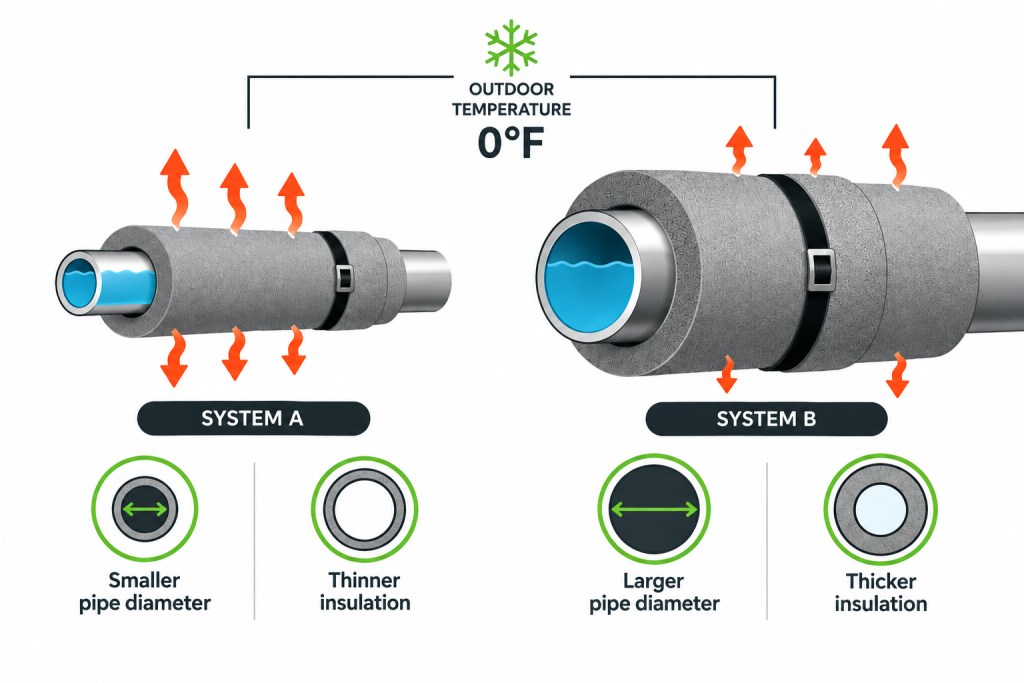
Pipe dimensions influence both the amount of fluid contained within the pipe and the thermal characteristics of the system. Freeze-time calculation and commercial heat-tracing design procedures account for pipe size, since a larger volume of fluid relative to surface area behaves differently than a smaller one.
4. Pipe Material
Thermon and nVent both include pipe material among the information required during heat-tracing design. The correct design should be based on the actual piping construction rather than assuming all pipes behave identically — different materials conduct heat at different rates.
5. Insulation
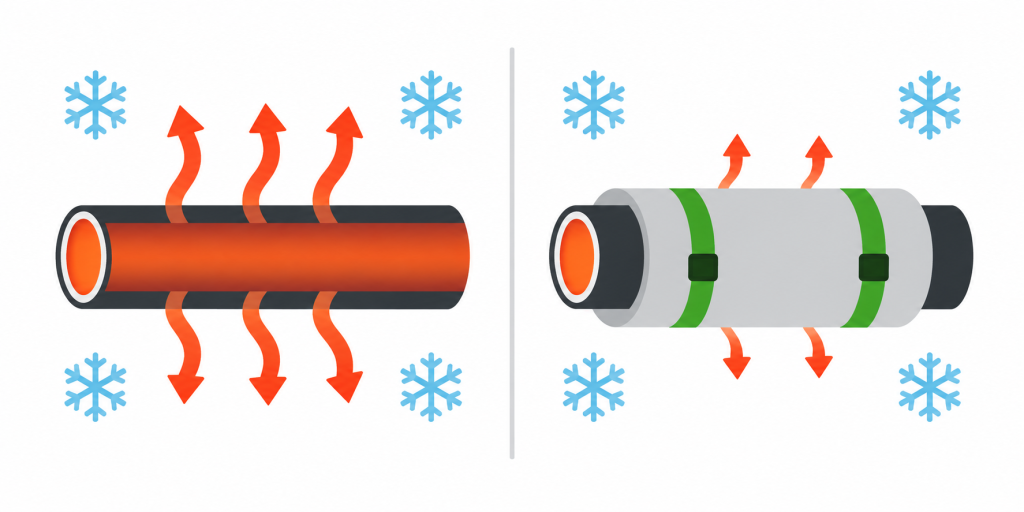
Insulation type and thickness directly affect heat loss. ASHRAE’s pipe-tracing heat-load calculation includes the dimensions and thermal properties of the insulation surrounding the system, since insulation slows heat loss rather than eliminating it.
6. Flow Conditions
A flowing system can behave very differently from a stagnant one. ASHRAE specifically notes that sufficient flow can prevent freezing, because the available heat content of the moving water offsets the system’s heat loss. Stagnant or low-flow sections don’t have that same continuous heat source, which is why they carry disproportionately higher freeze risk.
7. Equipment and Supports
Straight pipe isn’t the entire system. UniTherm’s design process requires designers to account for valves, pumps, other equipment, and pipe supports when determining heat-trace circuit lengths.
Evaluate Freeze Risk as a System, Not a Single Number
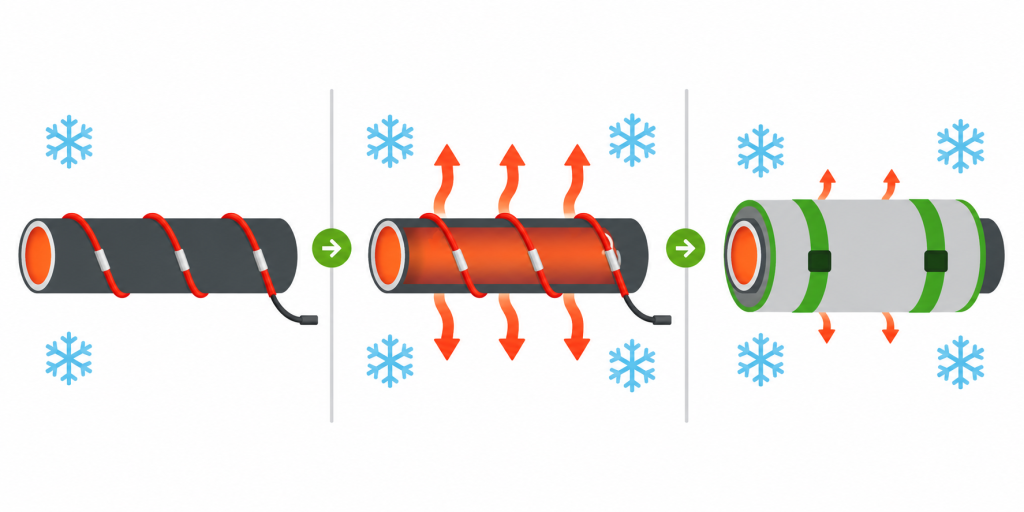
The lesson across all seven variables is the same: freeze risk should be evaluated as a thermal system, not from ambient temperature alone. Minimum ambient, maintenance temperature, pipe size and material, insulation, flow, and equipment all interact to determine how — and whether — a given line freezes.
UniTherm designs freeze protection around these actual operating conditions rather than a single temperature threshold. If you’re evaluating freeze risk for piping, tanks, or instrumentation on your site, contact our team to walk through the variables specific to your system.
This is week 3 of a 10 week series discussing the methods and science of frost protection systems. To learn more or to follow this series click this link: Subscribe to Updates
To find out more information on the frost protection offerings that Unitherm International can provide, go to shop.unitherm.com to view our full listing of products or email quote@unitherm.com to speak to a representative about custom insulation solutions.