Unitherm Insulation Systems

  • Home
  • Shop
  • Insulation Solutions
    • Plastics Equipment Insulation
    • Pipe and Valve Insulation
    • Passive Fire Protection
    • Freeze Protection and Material Handling
    • Exhaust Insulation
    • Marine Exhaust Insulation
    • Rigid Board Insulation
    • OEM
  • Applications
    • Aerospace
    • Data Centers
    • Defense
    • Exhaust Systems
    • Gas Compressors
    • Locomotive
    • Marine
    • Oil and Gas
    • On Highway
    • Power Generation
    • Reciprocating Engines
    • Turbines
  • Services and Capabilities
    • Custom Insulation Blankets, Jackets, and Covers
    • 3D AutoCAD
    • High Temperature Raw Goods
    • Custom Embroidery
    • WaterJet/CNC Machining
    • Private Labeling
  • Reseller Program
    • Reseller Locator
  • Blog
  • About
    • Contact
    • News
    • Customer Service
    • Order Now
  • Media
    • Documents
    • MSDS Sheets
    • Product Literature
    • Product Gallery
    • Video
    • Energy Study Library
    • New Customer Form
  • NPE 2027

October 6, 2026 by UniAdmin

Why Industrial Piping Freezes: It’s More Than Just 32°F

Water freezes at approximately 32°F (0°C) under ordinary conditions but that doesn’t mean every pipe on site freezes when the outdoor temperature drops to 31°F. Effective industrial pipe freeze protection depends on understanding what actually happens between “cold outside” and “frozen solid,” and that gap is where engineering judgment matters most.

There’s another critical variable at play: time.

A pipe and the fluid inside it hold thermal energy. When ambient temperature falls below fluid temperature, heat transfers from the warmer system toward the colder surroundings. This means the fluid’s temperature drops as that energy is lost. Freezing isn’t a light switch — it’s the end point of a heat-loss process that unfolds over minutes, hours, or days depending on the system.

The Variables That Determine Freeze Risk

Estimating how long stagnant water in an insulated pipe takes to cool to freezing accounts for several variables, including:

  • Initial water temperature
  • Ambient temperature
  • Pipe inside diameter
  • Water density
  • Specific heat
  • Thermal resistance of the pipe and insulation

With so many factors are involved, two piping systems exposed to the exact same outdoor temperature might behave very differently. Changing pipe diameter or insulation thickness, for instance, changes the thermal characteristics of the whole system. A larger volume of water retains more heat relative to its surface area, while thicker insulation slows how quickly heat escapes.
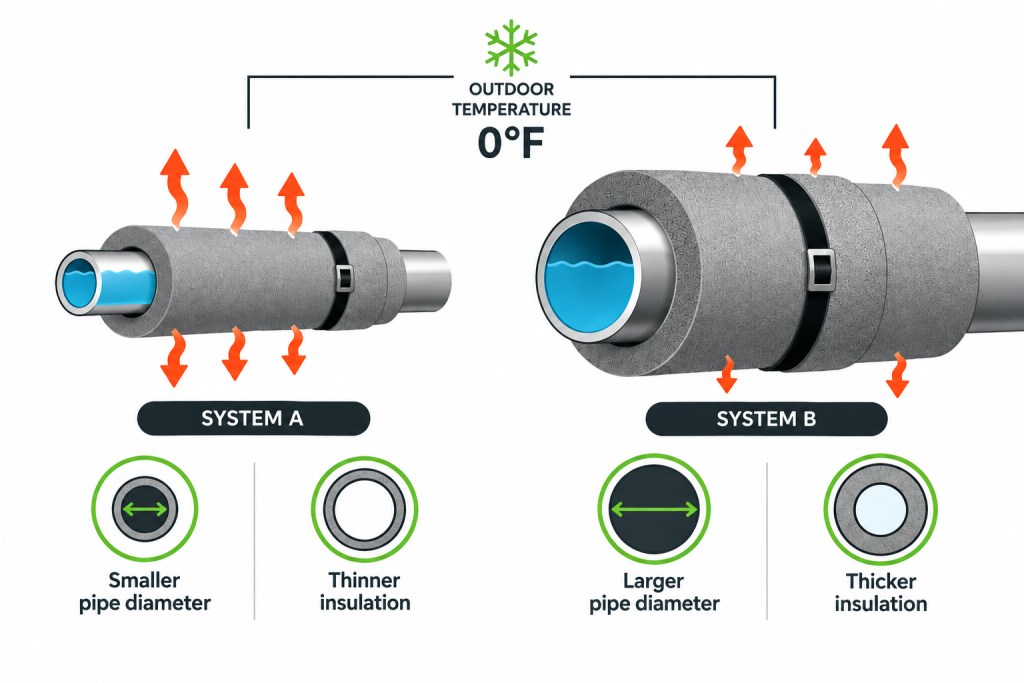
Fluid movement matters just as much. When sufficient flow is maintained, insulation can do its job retaining heat. This is because continuous water flow brings new thermal energy into the exposed section of pipe. Stagnant or insufficiently flowing water doesn’t have that same continuous heat source. Meaning dead legs, idle lines, and low-flow branches are consistently where freeze failures start.

Insulation Changes the Rate — Not the Freezing Point

It’s worth being precise about what insulation actually does. Adding insulation doesn’t change water’s freezing temperature. Instead, it increases resistance to heat transfer, which slows the rate at which the fluid loses heat to its surroundings.

Given enough time under sufficiently cold conditions, stagnant water can still freeze insulation alone buys time, it doesn’t guarantee protection indefinitely. That’s why engineers shouldn’t evaluate freeze risk based only on the question:

“Will the temperature fall below 32°F?”

A better question is:

“How much heat will this system lose under our design conditions, and how long can the fluid remain above its critical temperature?”

That perspective shift from a single threshold to a heat-loss and time calculation is the foundation of effective freeze protection.

Designing for Freeze Risk, Not Just Freeze Temperature

Freeze protection engineered around heat-loss variables holds up far better under real winter conditions than protection based on a single degree threshold. Whether that means sizing insulation correctly, specifying heat tracing for stagnant or low-flow lines, or identifying the dead legs most likely to fail first, the right approach starts with the math, not the thermometer.


This is week 2 of a 10 week series discussing the methods and science of frost protection systems. To learn more or to follow this series click this link: Subscribe to Updates

To find out more information on the frost protection offerings that Unitherm International can provide, go to shop.unitherm.com to view our full listing of products or email quote@unitherm.com to speak to a representative about custom insulation solutions.

Filed Under: Freeze Protection, Manufacturing, Safety, Uncategorized Tagged With: freeze protection, FreezePro® Frost Protection Systems, manufacturing

May 21, 2015 by UniAdmin

Proactive Maintenance : Insulation

The mindset of “if it isn’t broke don’t fix it” is a thing of the past. It is a mentality that even the best of us have been guilty of from time to time. While it may sound like a good idea, it can be damaging to a company in the long run. Staying the course down a single path can lead to a business owner getting blindsided by future problems. Just because something is working at the moment, doesn’t mean that future problems won’t arise. The new trend is to start protecting your investments and wellbeing by stopping the problem before it ever begins with proactive maintenance.

Preventative Maintenance: Insulation

Stop The Problem Before It Happens = Greater Savings

Whether you’re trying to make the most of an ever-dwindling staff and budget, or looking for even more ways to trim operations and maintenance costs, preventative maintenance on equipment and facilities can help save time and money in the long run.

The key point to preventative maintenance is stopping the issue before it ever begins. While there are some expenses related to running a good proactive maintenance program, it costs less to properly maintain equipment and facilities than it does to repair the damage from a premature breakdown or early deterioration of property.

Proactive maintenance of equipment and facilities is very similar to regular vehicle maintenance. The key to keeping your vehicle running well today and down the road is routine proactive maintenance. Many times significant and expensive repairs can be avoided if the vehicle is properly and regularly maintained.

Increases Life Cycle of Applications

Regular equipment Untitled-2maintenance leads to an improvement in the overall safety and reliability of the system. Planning and management of asset maintenance improve the life cycle of the assets and keeps them performing at peak productivity levels. As a result, costly unplanned downtime is minimized; workforce productivity increases; and asset lifecycle and return on asset (ROA) are improved.

Increases Performance

Regular improvements to the process for better machine efficiency and product quality increases maintenance productivity by detecting and identifying potential equipment problems before they grow. This reduces the frequency, severity, and cost of repairs while enabling your team to avoid unnecessary and unproductive tasks.

employee-burnProvides a Safe Work Environment

More efficient and frequently maintained work environments (including equipment and personnel) lead to a safer work atmosphere. When machines break down and errors occur, accidents are more likely to happen.

Where Does Insulation Fit In?

Insulation is built upon the idea of proactive maintenance practices. Insulation does all of the benefits listed above plus more. Once installed, your insulation needs no further maintenance. So you can feel good, knowing you are doing your bit for the planet while creating a more efficient and more collaborative work environment, to reduce costs and support your organization’s work processes.

What’s Next?

You can head over to our online shopping cart and check out all of our possible solutions for your facility. For as little as $16, you could be protecting yourself, your employees, and your business for the future.

For more information about our products and UniTherm, check out our website and social platforms:

Website

Facebook

Youtube

Twitter

Filed Under: Energy Efficiency, Fire Protection, From the Marketing Team, Manufacturing, Plastics Industry, Safety, Uncategorized, Valves and Actuators Tagged With: building engineering, efficiency, environment, FreezePro® Frost Protection Systems, industrial applications, insulation, ISOCOVERS Insulation Systems, lean manufacturing, overhead costs, Proactive Maintenance, protect, repair, Research & Development, thermal insulation, UniVest® Insulation Systems

  • English

Quick Links

MSDS
Product Brochures
Energy Study Library
Product Videos

Follow UniTherm

Facebook
Twitter
Blog
YouTube
Instagram
Pinterest

UniTherm Insulation Systems

711 Jones St.
Lewisville, TX 75057
Toll Free: 800.657.9542
Phone: 972.436.1401
Fax: 972.436.0112
info@unitherm.com

Copyright © 2026 · Executive Pro Theme on Genesis Framework · WordPress · Log in