Unitherm Insulation Systems

  • Home
  • Shop
  • Insulation Solutions
    • Plastics Equipment Insulation
    • Pipe and Valve Insulation
    • Passive Fire Protection
    • Freeze Protection and Material Handling
    • Exhaust Insulation
    • Marine Exhaust Insulation
    • Rigid Board Insulation
    • OEM
  • Applications
    • Aerospace
    • Data Centers
    • Defense
    • Exhaust Systems
    • Gas Compressors
    • Locomotive
    • Marine
    • Oil and Gas
    • On Highway
    • Power Generation
    • Reciprocating Engines
    • Turbines
  • Services and Capabilities
    • Custom Insulation Blankets, Jackets, and Covers
    • 3D AutoCAD
    • High Temperature Raw Goods
    • Custom Embroidery
    • WaterJet/CNC Machining
    • Private Labeling
  • Reseller Program
    • Reseller Locator
  • Blog
  • About
    • Contact
    • News
    • Customer Service
    • Order Now
  • Media
    • Documents
    • MSDS Sheets
    • Product Literature
    • Product Gallery
    • Video
    • Energy Study Library
    • New Customer Form
  • NPE 2027

September 15, 2026 by UniAdmin

Passive Fire Protection in Industrial Settings: What It Is and Why It Matters

Most industrial facilities think about fire protection in terms of active systems — sprinklers, suppression systems, and fire extinguishers. But there is another category of protection that operates differently: passive fire protection.

Where active fire protection responds after a fire starts, passive fire protection works by limiting the conditions that allow fire to spread. It doesn’t require activation — it’s built into the materials and configurations of the facility itself. For process industries that operate high-temperature equipment around combustible materials, passive protection is a critical component of a complete safety program.

What Passive Fire Protection Does

Passive fire protection systems are designed to contain fire and limit its spread by insulating ignition sources, protecting structural components from heat damage, and separating fire hazard areas from areas where personnel work. In industrial settings, this often means insulating hot components — pipes, valves, exhaust systems, and equipment — to prevent heat transfer to adjacent materials.

The thermal insulation function and the fire protection function overlap significantly. A cover that reduces heat loss from a high-temperature surface also reduces the risk that surface ignites adjacent materials or accelerates combustion in the event of an incident.

The Case for Passive Fire Protection in Industrial Settings

For components that require maintenance access — valves, flanges, pipe connections near combustible materials — rigid fire protection solutions create the same access problem as rigid thermal insulation. A removable flexible cover that provides fire protection allows inspection, maintenance, and repair without compromising the protection during normal operation.

UniTherm’s FirePro passive fire protection systems are flexible covers designed to insulate high-temperature industrial components and limit heat transfer in fire scenarios. They’re engineered for the access requirements of industrial environments — removable when needed, protective when in place. The FirePro line is available through shop.unitherm.com and information is at unitherm.com/passive-fire-protection.

When to Evaluate Your Passive Protection

Facilities should review passive fire protection any time there are changes to equipment layout, process temperatures, materials stored in the area, or regulatory requirements. Aging insulation that has lost its thermal or fire-protective properties should also be evaluated for replacement.

The combination of thermal insulation and passive fire protection in a single product is an economic efficiency argument as well as a safety argument — one investment serves two purposes.

For our standard removable insulation solutions, visit shop.unitherm.com.

To request a quote for a custom insulation solutions click here.

Filed Under: Energy Efficiency, Manufacturing Tagged With: efficiency, energy, energy conservation, energy efficiency, energy management, environment, lean manufacturing, manufacturing, plastics, thermal insulation

September 8, 2026 by UniAdmin

Sustainability in Process Heating: What Manufacturers Need to Know in 2026

Sustainability has moved from a background consideration to a front-of-mind issue for manufacturers. Customers are asking about it. Regulators are requiring reporting on it. And the economic case for sustainable manufacturing practices is increasingly difficult to separate from the case for operational efficiency.

Sustainable manufacturing is the ability to continuously utilize resources to manufacture products and maintain the environment and our lifestyles indefinitely. Sustainability requires that our resources remain at their current levels or improve for future generations.

Why Process Heating Is Central to the Sustainability Conversation

Process heating accounts for roughly 61% of manufacturing on-site energy use in the U.S. It is also a significant source of combustion emissions — emissions are directly proportional to fuel consumption. Reducing energy use in process heating reduces the carbon footprint of manufacturing at scale.

The key sustainability metrics for manufacturing operations: volume of solid waste per unit of finished goods, energy input per unit of production, tons of carbon emissions per unit shipped, and gallons of waste water per unit shipped. Improving process heating efficiency directly improves the energy intensity and carbon emissions metrics.

The Role of Insulation in a Sustainability Program

Insulation is one of the most straightforward sustainability investments available to a manufacturing facility. Reducing surface heat loss reduces the energy input required per unit of production — directly improving energy intensity. And because emissions are tied to fuel use, less fuel means fewer emissions.

Insulation improvements that reduce energy use and emissions are a visible, documentable part of a sustainability program.

UniTherm’s removable and reusable insulation products support sustainability on two levels: they reduce energy consumption during use (lower heat loss = less fuel burned), and they’re reusable rather than disposable — which supports waste reduction goals. UniTherm’s products are engineered to last, reinstall cleanly, and be removed without generating waste. Visit unitherm.com to learn more.

For our standard removable insulation solutions, visit shop.unitherm.com.

To request a quote for a custom insulation solutions click here.

Source: U.S. DOE, Improving Process Heating System Performance: A Sourcebook for Industry (Third Edition), 2015.

Filed Under: Energy Efficiency, Manufacturing, Uncategorized Tagged With: efficiency, energy, energy conservation, energy efficiency, energy management, environment, lean manufacturing, manufacturing, plastics, thermal insulation

September 1, 2026 by UniAdmin

Making the Financial Case for Process Heating Efficiency Upgrades

Getting approval for efficiency improvements often requires more than an engineering argument. It requires a financial argument — one that connects the technical opportunity to the metrics that corporate decision-makers actually care about.

The most important thing to emphasize is that the corporate audience will respond more readily to a dollars-and-cents impact than to a discussion of energy use and efficiency ratios.

Start with Life-Cycle Cost Analysis

This approach captures the total costs and benefits of an investment over its service life — not just the upfront capital cost.

One of the key findings that often emerges from this analysis: for fuel-fired systems, fuel costs can represent as much as 90% or more of total life-cycle costs, while initial capital is only about 3% and maintenance about 1%. When fuel costs dominate the life-cycle picture, any measure that reduces fuel consumption — even a modest one — can produce significantly positive financial results.

The Simple Payback Calculation

For projects that produce consistent annual savings, simple payback is the most accessible starting point. It’s calculated as: Initial investment ÷ Annual benefit = Payback period in years.

For insulation improvements, the annual benefit is the reduction in annual fuel or energy costs resulting from reduced surface heat loss. The calculation requires an estimate of the current heat loss rate, the cost of the energy being lost, and the reduction in loss rate after the improvement is made.

Beyond Payback: Connecting Efficiency to Corporate Goals

Reduced fuel consumption lowers operational costs, which improves earnings. For publicly held companies, the sourcebook points out that improved earnings, multiplied by the price-to-earnings ratio, directly increases shareholder value.

Efficiency also reduces environmental compliance exposure: “Combustion emissions are directly related to fuel consumption. They rise and fall in tandem.” Better efficiency means lower emissions, which means reduced regulatory risk.

Worker safety and comfort are also legitimate benefits. Process heating system optimization yields safety and comfort benefits, in addition to fuel savings. Reduced surface temperatures from insulation improvements improve ambient conditions in work areas.

For removable insulation products, the financial case is often straightforward: the energy cost of an uninsulated surface running continuously at process temperatures can frequently justify the cost of the cover within months. UniTherm’s Energy Study Library documents results from real installations. Visit unitherm.com/media/energy-study-library.

For our standard removable insulation solutions, visit shop.unitherm.com.

To request a quote for a custom insulation solutions click here.

Source: U.S. DOE, Improving Process Heating System Performance: A Sourcebook for Industry (Third Edition), 2015.
Filed Under: Energy Efficiency, Manufacturing Tagged With: efficiency, energy, energy conservation, energy efficiency, energy management, environment, lean manufacturing, manufacturing, plastics, thermal insulation

August 25, 2026 by UniAdmin

Preheating Combustion Air: A Proven Method for Reducing Fuel Use in Industrial Furnaces

For fuel-fired process heating systems operating at high temperatures, preheating combustion air is one of the most well-established and effective methods for reducing fuel consumption. The principle is simple: if the air entering the burner is already warm, less fuel is needed to achieve the required combustion temperature.

Combustion air preheating is the most commonly used method of waste heat recycling for high-temperature fuel-fired systems. It works by capturing heat from the hot exhaust gases and transferring it to the incoming combustion air — typically using a recuperator, regenerator, or heat pipe.

How the Savings Add Up

Combustion air represents a significant portion of the mass flowing through a furnace. Every degree of preheating reduces the fuel burden on the burner.

Depending on the system, exhaust gas temperature, and method of heat recycling, the sourcebook reports that it is possible to reduce energy intensity by 5% to 25% for heating systems. For systems with high exhaust temperatures, the upper range of that estimate is realistic.

When Preheating Is Most Applicable

For most fuel-based systems with relatively high exhaust temperatures — typically above 1,000°F — combustion air preheating is the natural first candidate for waste heat recycling. For processes using high volumes of air, such as drying ovens, preheating of makeup air or dilution air should also be considered.

For systems with lower exhaust temperatures or constrained configurations, other forms of waste heat management — including insulation improvements and load preheating — may offer better economics.

The Relationship to Insulation

It’s worth noting that combustion air preheating and insulation improvements are complementary, not competing. The sourcebook is explicit: tuning burners and improving insulation reduce the baseline energy consumption, which in turn reduces the magnitude of exhaust losses. Pursuing both together — reducing waste heat generation through insulation and recovering remaining exhaust heat through preheating — produces larger combined savings than either approach alone.

For exhaust systems and related components where heat management matters, UniTherm provides high-temperature insulation solutions for exhaust lines and associated hardware. Keeping exhaust temperature predictable and reducing incidental losses from exhaust piping supports the effectiveness of downstream heat recovery systems. Visit unitherm.com to learn more.

For our standard removable insulation solutions, visit shop.unitherm.com.

To request a quote for a custom insulation solutions click here.

Source: U.S. DOE, Improving Process Heating System Performance: A Sourcebook for Industry (Third Edition), 2015.

Filed Under: Energy Efficiency, Manufacturing, Uncategorized Tagged With: efficiency, energy, energy conservation, energy efficiency, energy management, environment, lean manufacturing, manufacturing, plastics, thermal insulation

August 18, 2026 by UniAdmin

What Is Waste Heat — And Can Your Facility Get Some of It Back?

Every industrial heating process produces waste heat. It’s unavoidable. The question is not whether it exists, but whether any of it can be put back to work.

Waste heat management covers three distinct activities: waste heat reduction, waste heat recycling, and waste heat recovery. Understanding the difference between these three is important for setting realistic expectations about what’s achievable.

The Three Categories

Waste heat reduction means reducing the generation of waste heat in the first place — through better insulation, tighter seals, lower exhaust temperatures, and reduced air infiltration. This is the category that overlaps directly with heat containment, and it’s generally the first step before pursuing recovery.

Waste heat recycling means using waste heat within the same system it came from. The most common example the sourcebook gives is preheating combustion air using heat recovered from the exhaust gases of the same burner. The sourcebook notes that this type of heat recycling can reduce energy use or energy intensity by as much as 25%.

Waste heat recovery means capturing waste heat from one process and using it in a different system — for example, using hot flue gases from a high-temperature process to generate steam or heat water for a lower-temperature process elsewhere in the facility. Payback periods typically ranging from one-half year to five years, with heat recovery of 10% to 75% of the available waste heat depending on the technology.

Where Waste Heat Comes From

The sourcebook provides a useful table of industrial waste heat sources and their temperature ranges. Furnace or heating system exhaust gases run between 600°F and 2,000°F. Gas turbine exhaust runs 900°F to 1,100°F. Hot surfaces — including uninsulated pipe and equipment surfaces — run between 150°F and 600°F. Even steam leaks and condensate return systems represent waste heat streams worth evaluating.

The Right Order of Operations

The sourcebook is explicit about the sequence: reduce waste heat first, then recycle it within the same system, then consider recovery to other systems. This matters because the economics of a heat recovery project depend on how much waste heat is actually available. Improving insulation and reducing air infiltration first may reduce the magnitude of the recovery opportunity — but it also reduces what the system has to generate in the first place, which is the better outcome.

Reducing hot surface losses through insulation is the first step in any waste heat management program. UniTherm’s removable insulation jackets, blankets, and covers help address heat loss from equipment surfaces, piping, and exhaust components — the foundational step before more complex recovery technologies are evaluated.

For our standard removable insulation solutions, visit shop.unitherm.com.

To request a quote for a custom insulation solutions click here.

Source: U.S. DOE, Improving Process Heating System Performance: A Sourcebook for Industry (Third Edition), 2015.

Filed Under: Energy Efficiency, Manufacturing Tagged With: efficiency, energy, energy conservation, energy efficiency, energy management, environment, lean manufacturing, manufacturing, plastics, thermal insulation

August 4, 2026 by UniAdmin

Removable Pipe and Valve Insulation: Solving the Access Problem in Industrial Facilities

Every industrial facility has piping systems that carry hot fluids, steam, or gases. And most of those systems have lengths of pipe, valves, and flanges that are uninsulated — not because facility managers don’t understand the energy loss, but because traditional insulation creates a maintenance problem.

When you need to access a valve for inspection or repair, you have to remove whatever insulation is covering it. With hard insulation, that means cutting and disposing of material. The replacement costs time and money. Do it a few times and the insulation often just stays off.

Pipe and Component Insulation

The Department of Energy’s identifies poor insulation on piping and ductwork as a recognized source of energy loss. Surfaces such as piping and ductwork that have poor or no insulation are sources of energy loss that are “often overlooked” in process heating assessments.

This is common precisely because the losses are diffuse and continuous rather than dramatic. A valve loses heat quietly, hour after hour, day after day. The impact is real but easy to ignore.

What Removable Insulation Covers Actually Do

Removable insulation covers for valves, flanges, and pipe components are engineered to be installed and removed without tools or specialized labor. They’re typically made from high-temperature-rated materials, stitched or sealed to fit specific component configurations, and secured with straps, lacing, or fasteners that allow for quick removal.

The key advantage over traditional insulation is that the covers are designed from the start to be removed and reinstalled. The insulation material doesn’t get damaged in the process, so the cover remains effective after repeated use.

UniTherm’s IsoCovers are removable insulation covers for valves and flanges. They’re available in standard sizes through the UniTherm shop and can be custom-manufactured for non-standard component configurations. Visit unitherm.com/pipe-and-components for the full range, or contact UniTherm to discuss a custom solution for your system.

Industries That Use Them

Removable pipe and valve insulation is used in oil and gas, power generation, chemical processing, food processing, marine applications, and anywhere else that high-temperature piping systems require regular maintenance access. The ROI case is generally straightforward: the energy cost of an uninsulated valve running continuously at operating temperature is often large enough to recover the cost of the cover within a single heating season.

For facilities in cold climates, there’s an additional benefit: reducing surface heat loss can help maintain consistent process temperatures in areas where ambient conditions vary seasonally.

For our standard removable insulation solutions, visit shop.unitherm.com.

To request a quote for a custom insulation solutions click here.

Filed Under: Energy Efficiency, Manufacturing, Uncategorized Tagged With: efficiency, energy, energy conservation, energy efficiency, energy management, environment, manufacturing, plastics, thermal insulation

July 28, 2026 by UniAdmin

Insulating Plastics Processing Equipment: How to Really Cut Your Facility’s Costs.

Plastics processing equipment, injection molding machines, extruders, blow molding equipment — operate at sustained high temperatures. The heating zones along a barrel or nozzle are running continuously, and a significant portion of that heat radiates outward into the surrounding work area rather than staying in the process where it belongs.

This is a straightforward heat containment problem of the kind identified in the DOE’s process heating sourcebook, and it has a straightforward solution: insulating plastic processing equipment keeps the heat in the barrel and out of the shop floor.

What’s Actually Happening Without Insulation

An uninsulated barrel on a plastics processing machine loses heat through radiation and convection from its surface. The control system compensates by running the heaters longer or more frequently to maintain the set temperature. More heater activity means more energy consumed, more wear on heating elements, and a warmer ambient environment around the machine.

The DOE sourcebook notes that improving insulation on process heating equipment reduces the amount of energy needed to perform a given heating task, reduces thermal stress on system components, and can improve consistency and product quality. All three of those benefits apply to plastics processing equipment.

The Case for Removable Insulation on Barrels and Nozzles

Permanent insulation on a plastics processing barrel is impractical. Operators need access to heating zones for inspection, thermocouple replacement, and maintenance. Fixed insulation that has to be cut away and replaced every time someone needs to check a heater band is not a workable solution.

Removable insulation jackets address this directly. They’re designed to fit specific equipment configurations, attach securely during production, and come off quickly when access is needed. The insulation itself is protected from damage during removal, so it can be reinstalled and reused.

UniTherm’s UniVest® insulation jackets are designed specifically for plastics processing equipment — barrels, nozzles, dies, and related components. They’re engineered for the temperature ranges and access requirements typical of injection molding, extrusion, and blow molding operations. Available through the UniTherm shop at shop.unitherm.com.

What to Expect in Terms of Results

While results vary by equipment type, temperature setpoint, and ambient conditions, published energy studies have documented meaningful reductions in heater band energy consumption when insulation jackets are added to plastics processing equipment. In addition to direct energy savings, facilities often report reduced ambient heat in work areas around the machines — a worker comfort and safety benefit that the DOE sourcebook also identifies as a legitimate benefit of insulation improvements.

UniTherm maintains an Energy Study Library on its website with documented results from insulation applications. Visit unitherm.com/media/energy-study-library for case data.

For our standard removable insulation solutions, visit shop.unitherm.com.

To request a quote for a custom insulation solutions click here.

Source: U.S. DOE, Improving Process Heating System Performance: A Sourcebook for Industry (Third Edition), 2015.

Filed Under: Energy Efficiency, Manufacturing, Plastics Industry, Uncategorized Tagged With: efficiency, energy, energy conservation, energy efficiency, energy management, environment, lean manufacturing, manufacturing, plastics, thermal insulation

July 21, 2026 by UniAdmin

Heat Containment: Why Insulation Is Usually the First Step in Any Efficiency Program

The Department of Energy’s process heating sourcebook divides efficiency improvements into five categories. Of those five, heat containment stands out as the one most facilities can act on quickly, without major capital investment and without interrupting production.

Heat containment means reducing energy losses to the surrounding environment. Every surface that runs hotter than ambient temperature is a source of those losses. The hotter the surface and the larger the area, the more energy is leaving the system and adding to your fuel bill.

What the DOE Sourcebook Says About Insulation

The sourcebook is direct about what poor insulation costs: “Poor insulation might reduce a process heating system’s efficiency, thereby increasing the amount of energy needed to perform a given process heating task. In addition to an increased cost for energy, the system is exposed to higher stress, which can accelerate wear and subsequently lead to more frequent breakdowns. Other side effects can be reduced product quality and increased maintenance.”

That last point is important. Insulation isn’t just about energy savings. When equipment runs hotter than it needs to because heat isn’t being retained properly, the surrounding components experience greater thermal stress. Over time, that means shorter service life and more downtime.

Where Insulation Applies

Insulation opportunities in a process heating system typically include: furnace and oven walls, doors, and ceilings; pipes, valves, and flanges carrying hot fluids, gases, or steam; ductwork connecting heating equipment to downstream processes; heating barrels, nozzles, and dies on plastics processing equipment; and exhaust components that carry high-temperature gases away from the process.

Each of these surfaces loses heat at a rate determined by the temperature difference between the surface and the surrounding air, the surface area, and the effectiveness of any existing insulation.

Removable vs. Permanent Insulation

For some surfaces — furnace walls, fixed ductwork — permanent insulation makes sense. But for components that require regular maintenance access, permanent insulation creates a practical problem: every time someone needs to access the valve, flange, or connection, they have to remove and replace insulation that wasn’t designed to come off.

Removable and reusable insulation covers solve that problem. They’re designed to go on and come off quickly, without damaging the insulation or the equipment underneath. This makes them practical for valves, flanges, fittings, and other components where access is part of the normal maintenance routine.

UniTherm’s insulation blankets and jackets are built specifically for this use case. UniVest® covers for plastics processing equipment, IsoCovers for pipes and valves, and custom insulation blankets for other industrial components — all removable, reusable, and engineered for high-temperature environments. Browse the full line at unitherm.com.

A Simple Place to Start

If you haven’t done a surface temperature audit recently, that’s a good first step. Walk the system with an infrared thermometer. Note which surfaces are running significantly above ambient temperature. Prioritize the largest, hottest surfaces — those represent the biggest ongoing losses. Then ask whether those surfaces are accessible for maintenance. If they are, removable insulation is worth a look.

For our standard removable insulation solutions, visit shop.unitherm.com.

To request a quote for a custom insulation solutions click here.

Source: U.S. DOE, Improving Process Heating System Performance: A Sourcebook for Industry (Third Edition), 2015.

Filed Under: Energy Efficiency, Manufacturing, Uncategorized Tagged With: efficiency, energy, energy conservation, energy efficiency, energy management, environment, lean manufacturing, manufacturing, thermal insulation

January 21, 2015 by UniAdmin

4 Common Misconceptions About Industrial Insulation

We come across many people who have the wrong idea about industrial insulation and think what we offer is not right for them. We ask them a few questions, and usually they are left wondering why they haven’t insulated their equipment sooner. We throw them a UniVest and they rush out the door to install it (cause it’s really that simple).

So we don’t have to go through the same spiel every time, we’ve compiled the most common misconceptions people have when it comes to industrial insulation.

1. Insulation is for my home, not my machines 

This is the most common one we come across and it’s pretty obvious why. The first thing people think about when you say insulation is their home and what’s inside their walls. That’s a perfect analogy because UniVests work the same way. Properly insulating your home saves you hundreds of dollars a year on home heating and cooling costs. It protects outside temperatures from affecting the temperatures you want inside. The easier it is for your home to maintain its temperature, the less you spend at the end of the month. UniVests are no different, except we deal with higher inside temperatures. Take a second and think, if you save hundreds by properly insulating your home, imagine how much could be saved when insulating your machine. We’ll give you a hint…its much greater!UniVest-3-Strap-On-Off-W-Background-Color

2. No Budget for Insulation

We all have budgets. Yeah, and we know they can be small and hard to deal with. Trust us, Windows 98 is getting really old at the office. Making new purchases on things that you are already operating without can seem like a luxury purchase. Little known fact is that with proper insulation, a company can see ROI (Return on Investment) in under 12 months. In the right conditions, a single set of UniVests or ISOCOVERS can last 5+ years after installed. That’s 5+ years of return. In 12 months or less, most companies make back the purchase price of a UniVest from energy savings alone.

3. My machines are working fine now without insulation

We’re sure they do, but wouldn’t you like for them to work better? Insulation minimizes the downtime of the machines they are on and relieves stresses from a hard working machine. This even increases the lifespan of the equipment. Wouldn’t we all like to work a little easier? Your machines would too.

4. Who Needs Protection AnywayIMG_8583

The biggest thing that people don’t realize is that insulation also improves workplace safety. As seen in a few of our videos on Youtube, a heated barrel with a UniVest on it can be touched and worked around without any special protective gear. More Safety = Less downtime and less liability. Insulation can also decrease surrounding ambient air temperature. Decreasing work fatigue due to high temperature and more comfortable work areas. 

Here’s typically the point where some people are kicking themselves for not already having insulation installed. If you didn’t make it this far, we completely understand. Our insulation systems are much more than the sum of their parts and offer a lot more usability than most people realize. If you’ve finally come to the conclusion that insulation could benefit you, take a look around our online shopping cart at www.shop.unitherm.com. For some help finding the product, measuring, or just want some more insulation entertainment like this blog, visit our youtube page: www.Youtube.com/UniThermInsulations

Filed Under: Energy Efficiency, Freeze Protection, From the Marketing Team, Manufacturing, Plastics Industry, Safety, Uncategorized Tagged With: cooling, education, energy, energy conservation, energy costs, energy efficiency, energy efficiency projects, energy management, environment, heating, industrial applications, industrial insulation, innovation, insulation, lean manufacturing, manufacturing, manufacturing industry, plastics, safety, thermal insulation, UniTherm, unitherm international

May 21, 2013 by Kendal White

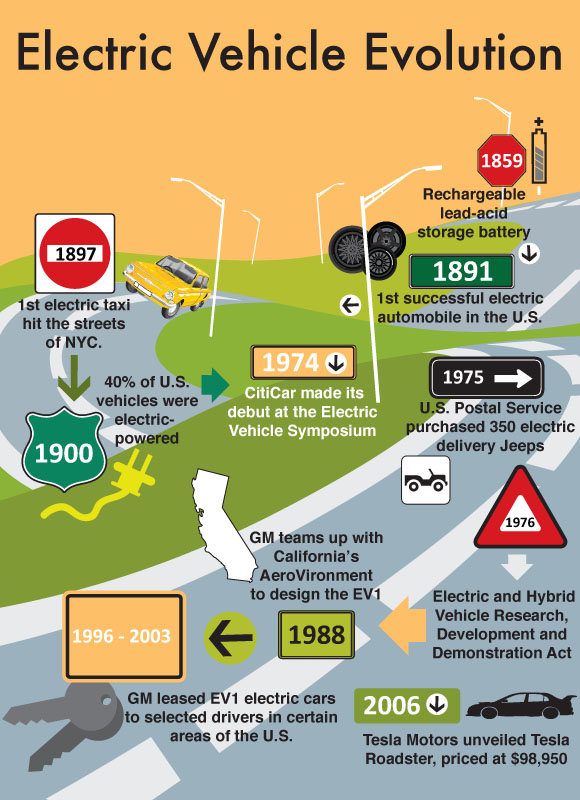
The Future of Energy Efficient Vehicles + (Infographic)

Flying cars were expected to be the future by 2000; despite erroneous expectations, cars have become radically advanced within recent years.  Cutting-edge technology has prompted the birth of the car of the future due to anxieties of energy efficiency and rising pollution.

By 2025, all new U.S. vehicles must be equipped with a 55mpg+ fuel range.  To contend with new fuel regulations, each year a car must be 5% more fuel-efficient.  The price at the pump is expected to increase 25% by 2025; presently, the average vehicle gulps an annual average of $1700.  Future hybrid & electric vehicles may cost $2400 more, but consumers will save $8200 in additional expenses.

Plug-in vehicles (PEV) or electric vehicles (EV) are gaining in popularity, but critics cite inflated prices, shortage of fueling stations, and limp technology advancements as probable disappointments. Despite the EV knockers, the Tesla Model S recently earned Car of the year for 2012 by Automobile Magazine and received Motor Trend’s Car of the Year honors in 2013.  Cadillac, BMW, Audi, and Honda are soon to follow in the EV trend in 2014.

Alternative fuels are the clean fuels of the future: liquid petroleum gas (LPG), ethanol, biodiesel, and natural gas.  LPG and natural gas are undoubtedly promising; these domestic fossil fuels yield less toxic pollutants and greenhouse gases.  Biodiesel, unlike its petroleum counterpart, originates from vegetable oils and animal fats. Corn and other domestic crops create ethanol.   The government promotes these unorthodox fuels with alluring tax incentives to qualifying consumers.

House Bill 2453 may leave an unpleasant taste in some consumer’s mouths after it is passed.  This tax, to be blunt, fines individuals to drive an electric vehicle.  This gas tax would be aimed at 2015 or later vehicles, with 55 miles/gallon or more.  A little background information: 60% of state projects are funded by taxes on gasoline.  Thus, states are collecting less tax money because of existing and future electric and hybrid vehicles.  Point blank, the fee would be 1.56 cents per mile.

These destined energy efficient vehicles could conceivably constitute 65% of the market in 2025.  Consumer demand, credits, and government incentives will determine the car dealership of the future.

energy-efficient-cars


Filed Under: Energy Efficiency Tagged With: biofuels, cars, electric car, energy, energy efficiency, energy efficiency projects, energy savings, ethanol, LPG, natural gas, propane, Tax Bill 2453, vehicles

Next Page »
  • English

Quick Links

MSDS
Product Brochures
Energy Study Library
Product Videos

Follow UniTherm

Facebook
Twitter
Blog
YouTube
Instagram
Pinterest

UniTherm Insulation Systems

711 Jones St.
Lewisville, TX 75057
Toll Free: 800.657.9542
Phone: 972.436.1401
Fax: 972.436.0112
info@unitherm.com

Copyright © 2026 · Executive Pro Theme on Genesis Framework · WordPress · Log in